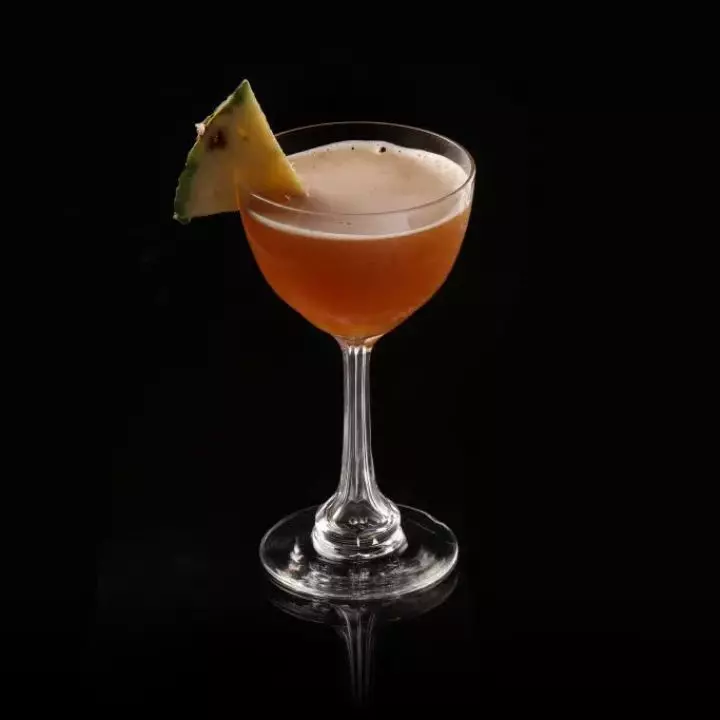
East India No.2
Ingredients
- 1 2⁄3 oz Cognac
- 1⁄3 oz Orange Curaçao liqueur
- 1⁄3 oz Pineapple juice
- 1⁄6 oz Monin Pineapple Syrup
- 2 dash Angostura Aromatic Bitters
Method
Glassware:
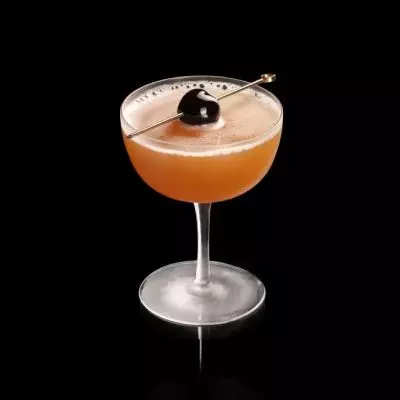
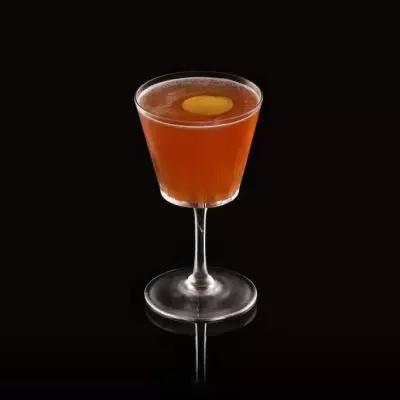
Serve in a Nick & Nora glass
Prepare:
- Select and pre-chill a NICK & NORA GLASS.
- Prepare garnish of pineapple wedge.
Method:
- SHAKE all ingredients with ice.
- FINE STRAIN into chilled glass.
Garnish:
- Garnish with pineapple wedge on rim.
Nutrition:
One serving of East India No.2 contains 180 calories
History:
An East India No. 2 classically has pineapple syrup (or pineapple juice), while an East India No. 1 instead calls for raspberry syrup.
The earliest East India recipe (No. 1), with raspberry syrup, appears in Harry Johnson's 1882 New and Improved Bartender's Manual, and it's Harry Johnson who also first records the use of pineapple syrup, in his updated East India recipe for his 1888 New and Improved Bartender's Manual.
The use of pineapple syrup in an East India is then supported in tomes such as Robert Vermeire's 1922 Cocktails: How to Mix Them, Frank Meier's 1936 The-Artistry of Mixing Drinks, and Harry MacElhone's 1923 Harry of Ciros ABC-of-mixing-cocktails, all pretty much the same as Harry Johnson's 1888 recipe. Indeed, MacElhone credits the recipe to Johnson.
Harry Craddock's influential 1930 The Savoy Cocktail Book stipulates pineapple juice in place of pineapple syrup, and this is repeated in other cocktail books which follow, including William James "Billy" Tarling's 1937 Café Royal Cocktail Book. I've honoured all the above by using both pineapple juice and syrup in my version of an East India.
Review:
The bitters are crucial in balancing this after-dinner brandy and pineapple cocktail.